Most grading comparisons stop at fees and turnaround times. Those are the two numbers that matter least. What decides whether a submission makes money is the resale price of the slab you get back, the odds of hitting the top grade, and how long the card takes to sell. This guide compares PSA, CGC, BGS and SGC on those terms, using the way Grade Hunter actually models Pokémon grading ROI: raw market price, graded market price, and a flat $75 all-in grading cost.
Quick answer
- Grading to sell
- PSA. Highest realised prices and the fastest exit on Pokémon.
- Grading in volume
- CGC. Cost per card and throughput start to outweigh the resale premium once card values are low.
- A genuinely perfect modern card
- BGS, only if a Black Label or Pristine 10 is realistic — and price the trade assuming you miss it.
- The number that decides it
- The spread between raw price and graded price, minus $75 and selling fees. Not the grading fee.
How grading ROI actually works
Every grading decision is the same piece of arithmetic, regardless of which company you send the card to:
Grade Hunter uses a flat $75 all-in grading cost across the whole site so that every card is judged on the same basis, and a 13% selling fee assumption on marketplace sales. Swapping graders changes two of those terms at once: it changes graded_sale_price (a CGC 10 and a PSA 10 of the same card are not the same asset) and it changes your odds of reaching the top grade at all.
This is why "which grader is cheapest?" is the wrong opening question. On a card with a $600 raw-to-PSA-10 spread, a $10 difference in submission fee is noise. A 25% difference in resale price is the entire trade.
PSA vs CGC vs BGS vs SGC
Four companies handle the overwhelming majority of Pokémon submissions. They are not interchangeable, and the differences that matter are about market behaviour, not service quality.
- Top grade
- PSA 10 (Gem Mint)
- Scale
- Whole numbers 1–10, no sub-grades on the standard label.
- Resale vs PSA
- Benchmark (100%)
- Best for
- Almost every Pokémon submission where you intend to sell. Vintage holos, modern chase cards, anything where you need a liquid exit.
- Watch out
- Strictest on centring and surface for the top grade, and the most crowded queue, so a PSA 9 outcome is common on cards that look mint to the eye.
- Top grade
- CGC 10 Pristine, above CGC 10 Gem Mint
- Scale
- Half grades (9.5) plus sub-grades on request, and a two-tier 10: Gem Mint and Pristine.
- Resale vs PSA
- Typically below a PSA slab of the same grade
- Best for
- High-volume submissions, bulk modern cards, Japanese cards, and holding for a personal collection rather than a quick flip.
- Watch out
- A CGC 9.5 sits in an awkward spot on resale — buyers price it closer to a 9 than a 10 on many cards.
- Top grade
- BGS 10 Black Label (four perfect sub-grades)
- Scale
- Half grades plus four published sub-grades: centring, corners, edges, surface.
- Resale vs PSA
- Discount at mid grades, large premium only at BGS 10 Black Label
- Best for
- Genuinely perfect modern cards where a Black Label or Pristine 10 is realistic, and cards where sub-grade transparency helps the buyer.
- Watch out
- Thin buyer pool for mid grades and slower sales. Chasing a Black Label is a low-probability bet, not a base case.
- Top grade
- SGC 10 (Gem) and SGC 10 Pristine
- Scale
- Half grades, distinctive black-matte inner label, no sub-grades.
- Resale vs PSA
- Usually the largest discount to PSA on Pokémon
- Best for
- Vintage cards where speed and cost matter more than the label on resale.
- Watch out
- Fewest Pokémon comps of the four, so pricing your own sale is harder and buyers discount the unfamiliar label.
Fees, turnaround windows and declared-value tiers change often and differ by country, so each card above links to that company's own current pricing page rather than quoting a number that will be stale next month.
The four ROI levers
Strip away the branding and only four things separate the labels financially.
| ROI factor | PSA | CGC | BGS |
|---|---|---|---|
| Resale price at the top gradeThe exit price is the single biggest ROI input. The same card in the same condition sells for different money depending on the label on the slab. | Highest | Lower | Lower, except Black Label |
| Chance of hitting the top gradeAn easier 10 is only worth it if the market pays for that 10. A cheaper, easier gem that sells for less can still be the worse trade. | Hardest 10 | Easier 10, plus a 9.5 tier | Easier 9.5, brutal Black Label |
| Time to cashCapital tied up in a slab earns nothing. Liquidity at the exit matters as much as turnaround at the intake. | Slowest queues, fastest sale | Faster queues, slower sale | Variable queues, slowest sale |
| Data you can price withYou cannot calculate ROI on a card with no comps. Grade Hunter's ROI engine runs on PSA 9 and PSA 10 sales because that is where the reliable data lives. | Deep sales + population data | Moderate | Thin at most grades |
Notice that two of the four levers are about the exit, not the submission. A cheaper, easier gem grade that sells for less money and takes three months to move is often the worse trade, even though it looks better on the submission invoice.
Grade scales are not equivalent
The single most expensive misunderstanding in grading is assuming a 10 is a 10. It is not:
- PSA 10 (Gem Mint) — one top grade, no tiers above it. Strict on centring and surface. This is the grade the Pokémon market benchmarks against.
- CGC 10 Gem Mint and CGC 10 Pristine — two tiers of 10, with Pristine above Gem Mint. That means a CGC 10 does not automatically signal the top of the scale to a buyer.
- BGS 9.5 Gem Mint and BGS 10 Black Label — the 9.5 is common, the Black Label requires four perfect sub-grades and is rare. The gap in value between them is enormous.
- SGC 10 and SGC 10 Pristine — a similar two-tier structure, in a label with the thinnest Pokémon comp pool.
Costs: what you really pay
The advertised grading fee is only part of your cost base. Before you compare labels on price, build the full number:
- The grading fee for your declared value and service level.
- Postage to the grader, with tracking and insurance.
- Return postage, also insured.
- Card savers, sleeves and packaging.
- Marketplace commission and payment processing when you sell — typically the largest single deduction after the card itself.
- Currency conversion, if you are submitting from outside the grader's home market.
Add those together and the difference between the major graders' headline fees usually shrinks to a small fraction of your total cost. That is the reasoning behind Grade Hunter's flat $75 constant: it approximates a realistic all-in cost per card and keeps every ROI figure on the site directly comparable.
Real spread examples
These are live Grade Hunter cards. Each one shows the raw market price, the PSA 9 and PSA 10 market prices, and the resulting profit at a $75 grading cost with a 13% selling fee. They also illustrate why label choice matters most on cards with a wide spread: the wider the gap, the more a resale discount costs you.
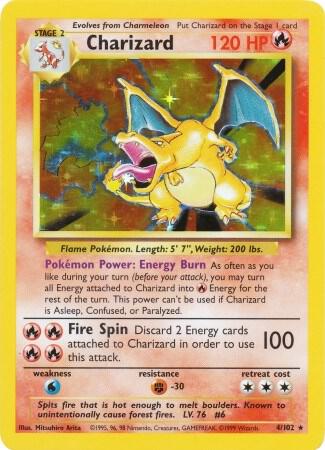
Iconic vintage holo with massive PSA 10 spread. Even a PSA 9 prints multiples of raw — strong downside protection.
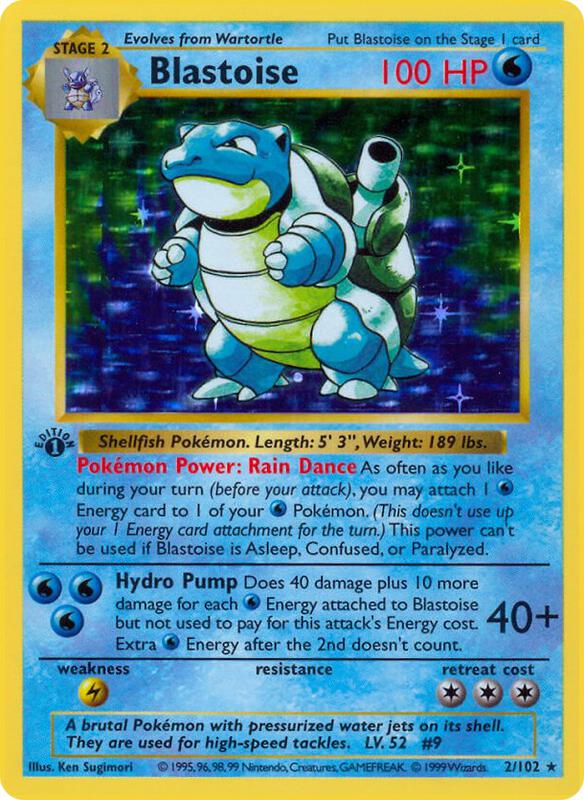
Even a PSA 9 outcome clears strong profit. The PSA 10 is the upside — not the entire bet.

Condition-sensitive holo with ferocious PSA 10 demand. Centering and surface drive everything.
On a card where the PSA 10 prints a large multiple of raw, taking a 20% resale discount to use a different label can wipe out more value than the entire grading fee. On a tight-spread modern card, the opposite is true and submission cost dominates.
Which grader should you use?
Match the label to the job rather than picking a favourite and using it for everything.
- 01You are grading to sell→ PSA
Deepest buyer pool and the highest realised prices on Pokémon. Every other label needs a specific reason to beat it.
- 02The card is flawless, modern and high value→ BGS (with a PSA fallback plan)
A Black Label or Pristine 10 is the only outcome that beats PSA meaningfully. Price the trade assuming you miss it.
- 03You are submitting bulk modern cards→ CGC
Cost per card and throughput matter more than a few percent of resale premium once the card value is low.
- 04The card is Japanese→ PSA or CGC
Both have real Japanese volume. Check comps for that specific card before you decide — the gap varies a lot by set.
- 05Raw value is under roughly $30→ Usually none of them
At a $75 all-in grading cost, the graded price has to clear raw plus fees plus marketplace commission. Most sub-$30 cards never get there.
Before you choose a grader, check whether the card is worth grading at all. Grade Hunter tracks raw and graded market prices on tens of thousands of Pokémon cards and ranks them by profit potential after grading cost.
Mistakes that destroy grading ROI
- Comparing fees instead of exits. The resale price gap between labels is usually far larger than the fee gap.
- Assuming the top grade. Build your base case on the second-best realistic outcome — a PSA 9, a CGC 9.5 — and treat the gem as upside.
- Ignoring liquidity. A slab you cannot sell for four months has a real holding cost, even if the sticker price looks fine.
- Grading cheap cards. At a $75 all-in cost, low-value raw cards almost never clear grading plus selling fees. Read is it worth grading Pokémon cards for the threshold maths.
- Skipping condition assessment. No label rescues a card with soft corners or off-centre printing. Learn what to look for in a raw card before you buy to submit.
- Chasing Black Labels. A BGS 10 Black Label is a lottery ticket. Ticket prices are fine; budgeting your rent against one is not.
Frequently asked questions
Is PSA or CGC better for Pokémon cards?
For resale, PSA is better for most Pokémon cards. It has the deepest pool of completed sales and the highest realised prices, so the same card in the same condition usually sells for more in a PSA slab than a CGC one. CGC is the stronger choice for high-volume or lower-value submissions, where cost per card and turnaround matter more than a few percent of resale premium.
Does a BGS 9.5 sell for more than a PSA 10?
Usually no. A BGS 9.5 typically trades between a PSA 9 and a PSA 10 on Pokémon, sometimes closer to the 9. The exception is a BGS 10 Black Label, which can sell for a multiple of any other slab — but hitting one is a low-probability outcome you should never build into your base-case ROI.
Which grading company is cheapest?
Fees change constantly and depend on declared value, service level, country and current promotions, so always price your submission on the grader's own fee page on the day you submit. What matters more than the headline fee is your all-in cost: grading, shipping both ways, insurance, and the marketplace commission you pay when you sell. Grade Hunter models a flat $75 all-in grading cost so every card is compared on the same basis.
Do CGC and BGS slabs sell slower than PSA?
Generally yes for Pokémon. Fewer buyers search for those labels, so listings sit longer and you often accept a lower offer to move the card. Slow resale is a real cost: capital tied up in a slab is not earning anything.
Is grading Pokémon cards worth it at all?
Only when the graded price clears your raw purchase price plus grading cost plus selling fees, with enough margin to survive a PSA 9 instead of a PSA 10. At a $75 all-in grading cost, most cards worth under about $30 raw never clear that bar. Check the live spread on the specific card before you submit anything.
Should I use CGC for Japanese Pokémon cards?
Both PSA and CGC have genuine Japanese Pokémon volume, and the premium gap between them varies a lot by set and card. Look at completed sales for that specific card in both labels before deciding, rather than applying a blanket rule.
Do sub-grades increase a card's value?
Sub-grades help buyers trust the card, and strong sub-grades on a BGS 9.5 can lift the price a little. But they do not change the market's ceiling: the label and the headline grade drive almost all of the resale value.
Grade Hunter provides market analytics, not financial advice. Grading outcomes are uncertain, and prices move. Always verify current fees with the grading company and current sales with the marketplace before submitting a card.