Is it worth grading Pokémon cards?
Sometimes — but not always. Grading Pokémon cards is worth it when the raw price, likely grade outcome, grading fees, and PSA resale value support a real profit margin. This guide gives you the honest framework, then lets you check any card in seconds.
The short answer
Grading is worth it on some cards, not all. The decision turns on five inputs:
- The spread between raw and graded prices
- The card's actual condition and likely grade
- Grading fees, shipping, and marketplace fees
- Real demand and weekly sales volume
- Whether you ran the numbers or guessed
Submitters who lose money almost always skipped one of these. The good news: every input is checkable in seconds with the right data.
When grading is worth it
The five conditions that make a grading submission a rational decision rather than a hope.
Big raw-to-graded spread
If a $20 raw card sells for $300+ in a PSA 10, the spread covers fees, shipping, and risk with room left over. Spread is the single biggest signal.
Strong PSA 9 floor
When even a PSA 9 prints a profit after costs, you have a real margin of safety. The PSA 10 becomes upside, not the whole bet.
Clean condition
Sharp corners, centered art, no surface scratches, no print lines. The fewer flaws, the higher the realistic grade outcome.
Healthy demand
Cards with regular weekly sales volume are easy to exit. You can sell when you want to, not when the market lets you.
Low downside vs cost
If a worst-case PSA 8 still returns most of your money, the trade is rational. Always model the floor, not just the ceiling.
When grading is not worth it
The patterns behind almost every losing submission. If you spot two of these, don't grade.
Tiny value spread
When raw and PSA 10 prices are close, fees eat the entire margin. A $30 raw card with a $55 PSA 10 is rarely worth the gamble.
High grading cost vs card value
Submitting a $10 card under a $19 economy tier still leaves shipping, return shipping, and selling fees. The math almost never works.
Weak demand
If the PSA 10 has one sale per quarter, you are not graded — you are stuck. Liquidity matters as much as price.
Condition issues
Whitening, surface marks, off-center prints, or visible scratches drop you from PSA 10 territory into PSA 8 or worse.
Overestimating the likely grade
Most submitters think every card is a gem. PSA 10 rates for modern cards typically sit between 30% and 60%. Be honest with yourself.
Thin margins after fees
Grading fee + shipping both ways + 13% eBay/PayPal fees adds up fast. Always run the math after fees, not before.
How to decide: the six-question check
Run any card through these six questions. If the answers line up, submit. If they don't, sell raw or hold.
- 01
What is the card worth raw, right now, on TCGPlayer?
- 02
What is it worth in PSA 8, PSA 9, and PSA 10 from recent eBay sold sales?
- 03
What grade is realistic given the card's actual condition (not your hopes)?
- 04
What is your all-in cost: grading fee + shipping both ways + selling fees?
- 05
What profit remains at PSA 9 and PSA 10 after every cost is subtracted?
- 06
Is there enough margin to justify the risk and the wait time?
Grade Hunter answers questions 1, 2, 4, and 5 automatically for any card in our database.
Run a card through the checkWhy collectors get this wrong
The five mistakes behind most unprofitable submissions. None of them require grading expertise to avoid — just discipline.
Chasing PSA 10 fantasies
Building the entire ROI case on a PSA 10 outcome that has a 35% chance of happening. If PSA 9 loses money, the bet is fragile.
Ignoring fees
Comparing raw price to PSA 10 price and calling the difference 'profit'. Real profit is what's left after grading, shipping, and selling fees.
Using stale prices
Quoting a high sale from six months ago. Use the last 30 to 90 days of sold comps — that's what your card will actually sell for.
Grading low-demand cards
A card with no weekly sales is a card you cannot sell on demand. Liquidity is part of the decision, not an afterthought.
Trusting emotion over numbers
Sentimental favorites and childhood pulls feel valuable. The market does not care. Run the numbers either way.
How Grade Hunter helps you decide
Knowing the framework is half the battle. Running the numbers on every card you consider is the other half. We do the math.
Raw vs PSA on one screen
Live TCGPlayer raw prices next to recent PSA 8, 9, and 10 eBay sales. No tab switching, no spreadsheets.
Browse cardsROI estimated automatically
Net profit and percentage ROI calculated with a conservative $75 all-in grading cost so every card is comparable.
See top opportunitiesOpportunity Score
A 0–100 grade-letter score combining spread, liquidity, and price stability — so you can rank candidates instantly.
Open leaderboardWatchlist tracking
Save cards you're considering, monitor price moves, and submit at the right moment instead of guessing.
Open watchlistWant the full ROI math walkthrough?
Open the Pokémon card grading calculatorWhen grading is clearly worth it
Three real cards from the Grade Hunter database. Each one passes the framework above: wide spread, strong PSA 9 floor, and real demand. ROI uses a $75 grading cost and a 13% selling fee.
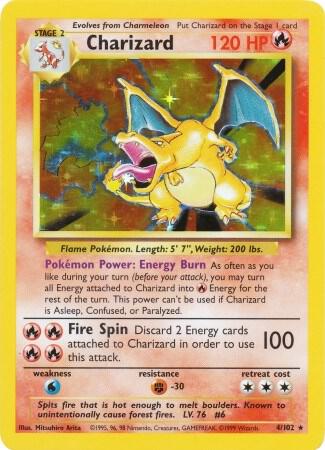
Iconic vintage holo with massive PSA 10 spread. Even a PSA 9 prints multiples of raw — strong downside protection.
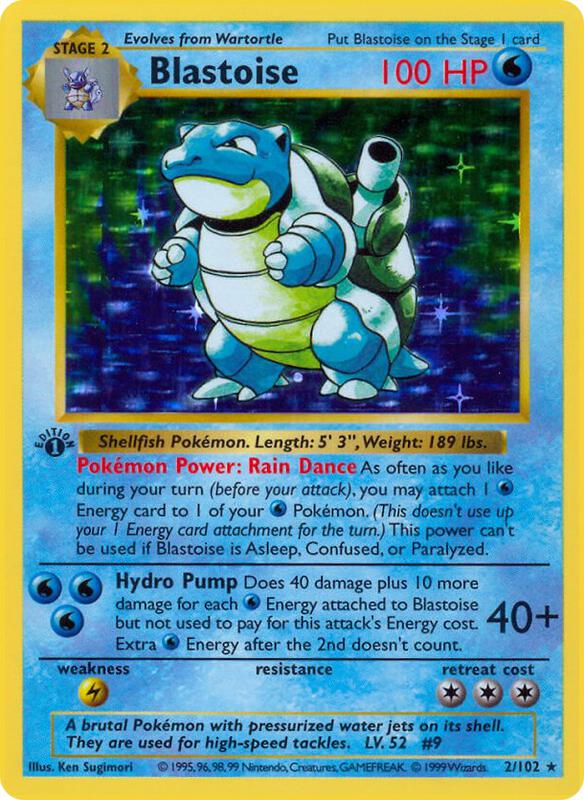
Even a PSA 9 outcome clears strong profit. The PSA 10 is the upside — not the entire bet.

Condition-sensitive holo with ferocious PSA 10 demand. Centering and surface drive everything.
Grading questions, honest answers
Stop guessing. Check before you submit.
Grade Hunter pulls live raw prices and recent PSA sales for any Pokémon card and runs the ROI math instantly. Free to try, no signup required.