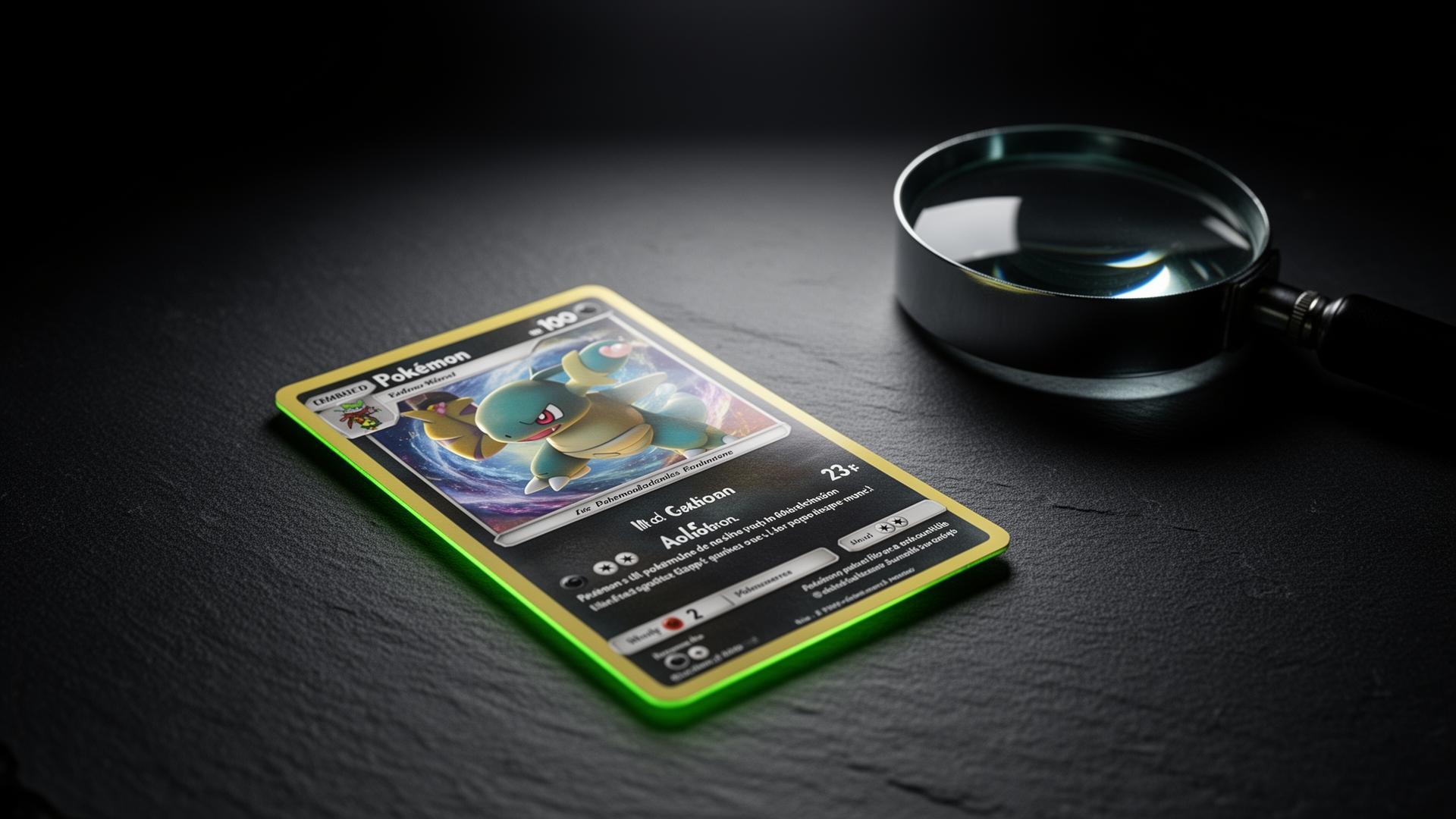
Buying raw Pokémon cards for grading is one of the most exciting parts of the hobby — and one of the easiest places to lose money. Done well, it turns a $20 card into a $500 graded sale. Done poorly, it turns a $200 budget into a stack of PSA 8s and a grading invoice. This complete guide shows you exactly what to look for before you buy, how to inspect a card like a grader, and how to use real ROI math to grade only the cards that deserve to be graded.
1. The opportunity in raw cards
The raw-to-graded spread is the single biggest profit lever in the entire Pokémon market. A clean Base Set Charizard sells raw in the $400–$500 range, and a PSA 10 of the same card crosses $14,000+. The card hasn't physically changed — only the certified grade has. That spread is what every serious collector and reseller is hunting.
But here's the part beginner guides leave out: most cards are not PSA 10s. PSA 10 rates for modern English Pokémon cards typically sit between 30% and 60%, and on vintage they can drop into single digits. If you submit ten cards, you are statistically getting a mix of 10s, 9s, and 8s — not ten gems. Your job before buying is to push the odds in your favor and verify the math still works at PSA 9.
The card you should grade is the one that's still profitable as a PSA 9 — the PSA 10 is the upside, not the entire bet.
2. What makes a card worth grading
Before you ever touch a card with a loupe, the financial picture has to work. Four inputs decide whether a card is even a candidate:
- Spread: the dollar gap between the raw price and recent PSA 9 / PSA 10 sales.
- Demand: are there active weekly sales of the graded version, or does it sit on listings for months?
- Liquidity: can you exit at the price the comps say, in the timeframe you need?
- Era and rarity: vintage chase cards, modern alt arts, and special illustration rares behave very differently — but both can work.
Here's a textbook vintage candidate from the Grade Hunter database — a card where the math works at PSA 9 and the PSA 10 is pure upside:
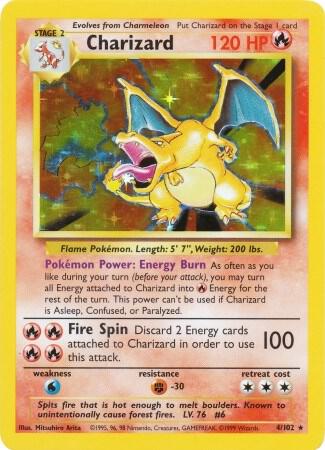
Iconic vintage holo with massive PSA 10 spread. Even a PSA 9 prints multiples of raw — strong downside protection.
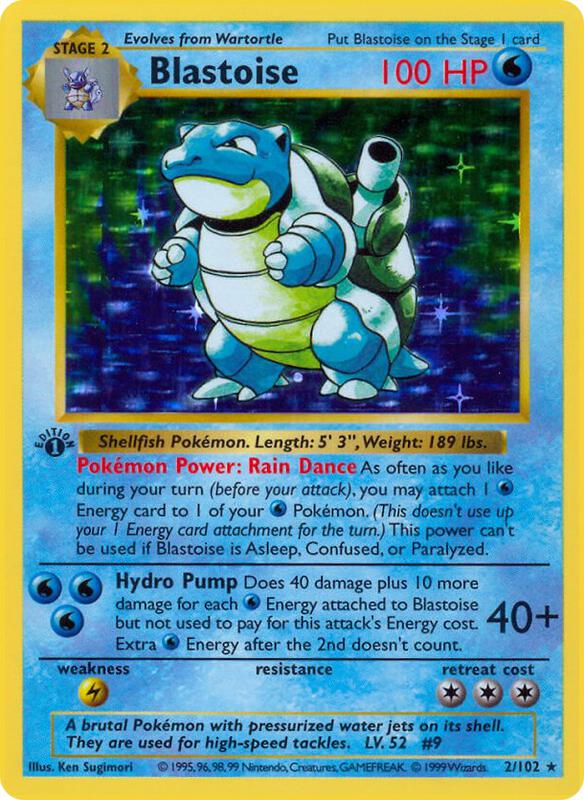
Compare that with a modern-classic chase that lives or dies on condition — exactly the type of card this guide is built to help you evaluate before purchase:

Condition-sensitive holo with ferocious PSA 10 demand. Centering and surface drive everything.
3. Condition is everything (deep dive)
PSA grades a card on four physical attributes: centering, edges, corners, and surface. A PSA 10 requires all four to be effectively perfect. Miss one, and you are usually capped at a 9. Miss two, and you are looking at an 8.
Centering
Centering is the alignment of the card art inside the card's border. PSA scores it as a ratio of opposing borders.
- PSA 10: roughly 55/45 or better on the front, 75/25 or better on the back.
- PSA 9: typically up to 60/40 front, 90/10 back.
- PSA 8: looser tolerances; obvious shifts visible at arm's length.
Check both faces. Many submitters fixate on the front and forget that PSA inspects the back too. A perfect front with a 95/5 back is still capped at a PSA 9.
Edges
Edges are the four perimeter lines of the card. Two failure modes kill grades here:
- Whitening: exposed white card stock from shuffling, sleeve friction, or removal from sleeves. Even hairline whitening visible to the naked eye is a PSA 10 killer.
- Chipping: small missing pieces of edge material, usually on holo cards with thicker foil layers. Chipping is almost always a PSA 8 or below.
Corners
Corners should be sharp 90-degree points with no rounding, fraying, or whitening. Rotate the card under direct light and inspect each corner from the front and back.
- Sharp: the corner reflects light cleanly with no fuzzy halo.
- Soft: a faint white "cloud" appears at the point — already a PSA 9 cap.
- Damaged: visible bend, fold, or material loss — usually PSA 7 or worse.
Surface
Surface flaws are the most commonly missed defects because they only show under the right light. Tilt the card under a single bright source and look for:
- Scratches: hairlines and deeper scratches — especially on holofoil, where they refract light.
- Print lines: faint horizontal or diagonal lines from the printing process. Common on certain modern sets and instantly drop you from PSA 10.
- Holo issues: waviness, scuffs, or "orange peel" texture across the holographic layer.
- Dirt and dents: any indentation visible from the back, or sticky residue, is an automatic PSA 8 cap.
4. How to visually inspect cards
Inspection is a method, not a vibe. Build a repeatable routine and you will catch flaws that other buyers miss.
Lighting
Use a single, bright, directional light source — a desk lamp or a phone flashlight works well. Indirect ceiling light hides scratches and print lines. Raking light (light hitting the card at a low angle) is the gold standard for spotting surface issues.
Angles
- Front, flat under direct light — checks centering and obvious flaws.
- Front, tilted 30°–60° under raking light — reveals scratches and print lines.
- Back, flat — checks back centering and dents.
- Each edge end-on — reveals whitening and bend along the edge.
- Each corner under magnification — reveals softness and fraying.
Common beginner mistakes
- Inspecting only the front — graders use both faces.
- Inspecting through a sleeve — you will miss surface flaws every time. Always pull the card.
- Skipping magnification — a 10x loupe or phone macro lens is non-negotiable for high-value submissions.
- Inspecting in mixed light — switch off the ceiling, use one source, and rotate the card to it.
5. Red flags — do not grade these
Some defects are deal-breakers. If you see any of these, the card is almost certainly not worth grading at any tier.
Whitening visible without magnification almost always caps the card at PSA 8 or 7.
Manufacturing defects PSA cannot ignore. Modern sets are particularly prone.
Sharpness is binary to graders. Even one fuzzy corner caps you at PSA 9.
If you can see it without tilting the card, PSA absolutely will too.
Any back indentation visible to the naked eye drops you below PSA 8.
Centering caps grade hard. Modern cards in particular need to be tight.
6. High-probability PSA 10 indicators
"Clean" is a word every collector throws around. Here's what it actually looks like in practice:
- Borders look symmetrical at a glance — no need to measure.
- All four corners reflect light as sharp points with no halo.
- Edges show no whitening at all, even when held edge-on under bright light.
- Surface is glassy — no scratches, no print lines, holo pattern is uniform.
- Back centering looks roughly even top-to- bottom and side-to-side.
- No "orange peel" texture on holo layers under raking light.
Cards meeting all of these criteria are your true PSA 10 candidates. Cards meeting most of them are PSA 9 candidates — and as we've already seen, PSA 9 alone can be plenty profitable on the right cards.
Even a PSA 9 outcome clears strong profit. The PSA 10 is the upside — not the entire bet.
7. ROI thinking (where Grade Hunter comes in)
Once you've inspected a card and it passes the physical bar, the only remaining question is financial: does the math work? This is where most collectors leave money on the table — they buy on instinct and submit on hope.
The honest cost of grading
A submission's true cost is not just the PSA fee. It includes:
- PSA submission fee (Value or Regular tier in most cases)
- Shipping to PSA, with insurance
- Return shipping
- Selling fees on the back end (typically ~13% on eBay)
Grade Hunter standardizes on a conservative $75 all-in grading cost so every card on the platform is comparable on a level playing field.
Risk vs reward, made visible
Once you know the cost, the question becomes: what does this card return at each possible grade outcome? A good submission looks like this:
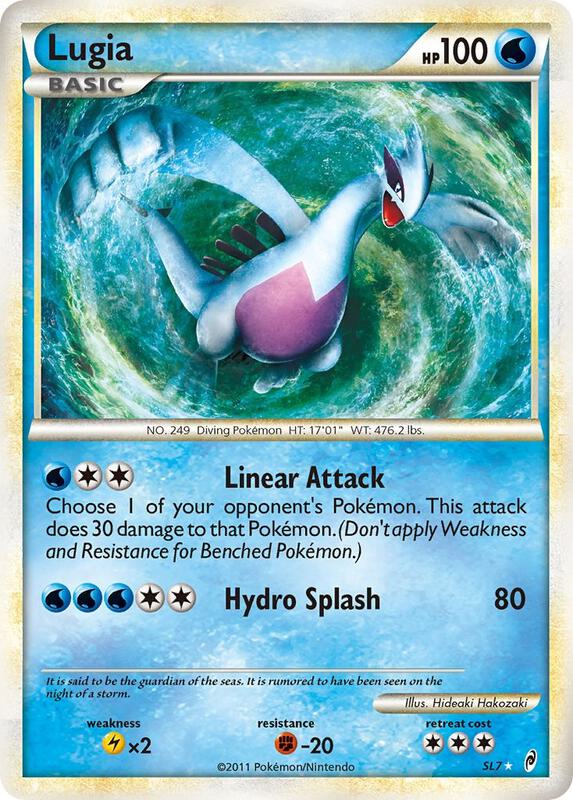
Shiny holos scratch easily — gem rate matters. Even PSA 9 is very profitable here.
Both PSA 9 and PSA 10 are profitable. PSA 8 is roughly break-even or a small loss. That's a rational trade — the downside is bounded and the upside is real.
8. Common mistakes people make
Overestimating condition
Almost every collector grades their own cards a tier higher than PSA does. Assume you're biased and inspect like a stranger.
Ignoring back centering
The single most-missed PSA 10 killer. Always check the back.
Grading low-value cards
Grading a $15 card for $19+ in fees only works if the PSA 10 sells for several times raw with active demand. Most don't.
Trusting old comps
A high sale from twelve months ago doesn't pay you today. Use sold prices from the last 30–90 days for an honest picture.
Letting emotion drive the call
Sentimental cards still need to clear the same financial bar as anything else. Run the numbers either way.
9. Pro strategies (advanced)
Buying singles vs collections
Singles let you cherry-pick condition, but you pay close to market. Collections and lots offer better blended cost basis, but you take whatever condition shows up. The right play depends on your inspection time vs capital.
Sniping undervalued listings
The best raw deals are usually poorly photographed listings on smaller marketplaces — sellers who don't know what they have. Filter by listing date, low photo quality, and generic titles. Then verify against Grade Hunter pricing.
Bulk grading strategies
PSA's bulk submission tiers offer significant per-card discounts but require minimum quantities. Build submissions around a single tier, batch your inspections, and submit only when you have at least 20 candidates that all clear ROI individually.
Market timing
Grade when graded prices are stable or rising and raw is soft — that widens spread without you needing the market to move. Use the watchlist to monitor cards over time and submit at the right moment instead of guessing.

Heavy PSA 10 multiplier vs PSA 9. A copy with sharp corners and clean edges is the textbook submission.
10. The pre-submission checklist
Before you send a card for grading, ask yourself every one of these questions. If the answer to any of them is "I don't know," stop and find out.
Pre-submission checklist
- Have I inspected centering on both the front and back?
- Are all four corners sharp under direct light?
- Is the surface clean of scratches, print lines, and holo flaws under raking light?
- Are the edges free of whitening and chipping?
- Do I know the current raw price from active sold listings?
- Do I have recent PSA 8, 9, and 10 sold comps from the last 30–90 days?
- Is this card profitable at PSA 9 after $75 all-in cost and ~13% selling fees?
- Is graded sales volume high enough that I can exit when I want to?
- Have I removed any emotional bias from the decision?
11. Conclusion
Buying raw Pokémon cards for grading is a craft, not a coin flip. The collectors who consistently profit aren't lucky — they're rigorous. They inspect every face, run the math at every grade outcome, and only submit cards where the financial case survives a worst-case grade.
Use the framework in this guide on every card you consider. Combine it with Grade Hunter's live data and you have something most submitters never build: an honest, repeatable edge.
Run the math on your next purchase
Live raw vs PSA prices, ROI at every grade, and an Opportunity Score on 35,000+ cards.
12. FAQs
What should I look for when buying raw Pokémon cards for grading?
Inspect centering (front and back), edges (whitening, chipping), corners (sharpness), and surface (scratches, print lines, holo damage) under bright, raking light. Then verify that the raw price, likely PSA grade, and graded sold prices leave room for profit after a $75 grading cost and ~13% selling fees.
How do I check Pokémon card centering before grading?
Hold the card flat under direct light and measure (or eyeball) the white border on left vs right and top vs bottom. PSA 10 candidates generally need to be inside ~55/45 front centering, with back centering at 75/25 or better. Anything looking obviously shifted is a likely PSA 9 cap.
What is whitening on a Pokémon card?
Whitening is exposed white card stock along edges and corners caused by handling, shuffling, or storage. Even hairline whitening visible without magnification will usually drop your card from PSA 10 to PSA 9 or lower.
Are modern Pokémon cards worth grading raw?
Modern alt arts, special illustration rares, and chase cards from popular sets can be excellent grading candidates because demand is high and PSA 10 premiums are real. The key is the spread vs raw price after fees — many low-tier modern holos do not justify grading.
How do I know if a Pokémon card will get a PSA 10?
You don't know with certainty — only PSA does. But you can estimate probability by checking centering, sharp 90-degree corners, no whitening on edges, and a clean surface under raking light. The Grade Hunter ROI model assumes a mix of grade outcomes so you don't have to guess perfectly.